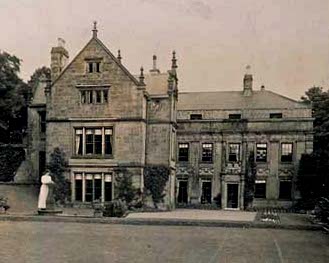
The ironworks at Bersham have a long history, but it isn't really until the latter half of the eighteenth century and the arrival of the Wilkinsons that the site rose to fame. The first major works were founded in 1718 by Charles Lloyd, a friend of Abraham Darby of Coalbrookdale fame, the man who revolutionised ironmaking by using coke instead of charcoal. Why is this so important? you may ask. Charcoal burns up to very high temperatures (2700 degrees Celsius, actually), and had been often used in the production of iron, which is obtained from the raw ore, haematite, which melts between 1200 and 1550 degrees Celsius (thanks, Wikipedia!) - however, charcoal gives off a lot of byproducts, and some of these passed into the raw molten iron. These impurities could mean inferior metal, which is never good. Coke, which is basically a baked charcoal, doesn't give off these impurities, and had been used for years in the beer industry, roasting malts, before Darby first used it for iron production in 1709. Darby's innovation led to the widespread availability of good-quality metal, which proved to be a catalyst for industrial development in Britain.
Coke was first used in Bersham in 1721, but Lloyd went bankrupt in 1727 and the ironworks were taken over by John Hawkes, Abraham Darby's son-in-law, until his death in 1739. Bersham in this period specialised in cast iron goods. Cast iron is basically the process where the molten metal is poured into moulds and 'cast' in the desired shape. When the iron comes out of the furnace, it is initially formed into "pigs" - the term having something to do with a sow suckling piglets, though the precise etymology escapes me at the moment:

Wrought iron, by contrast, is iron that is formed into a bar and then worked, or 'wrought', into the desired shape, usually in some form of smithy. The process of forming into a bar was often done by the 'bloom' method, where the ore was heated to just below the melting point, which allowed any impurities present in the ore to be released as slag, with the iron itself staying as a fairly spongy mass, or bloom. It was then 'puddled' into a bar.
Anyway, that's enough chemistry for now. In 1753, Isaac Wilkinson took over the lease of the site, following a career made up in Lancashire/Cumbria. He failed to make a success of the site, and left in 1763, with his two sons John and William taking over.
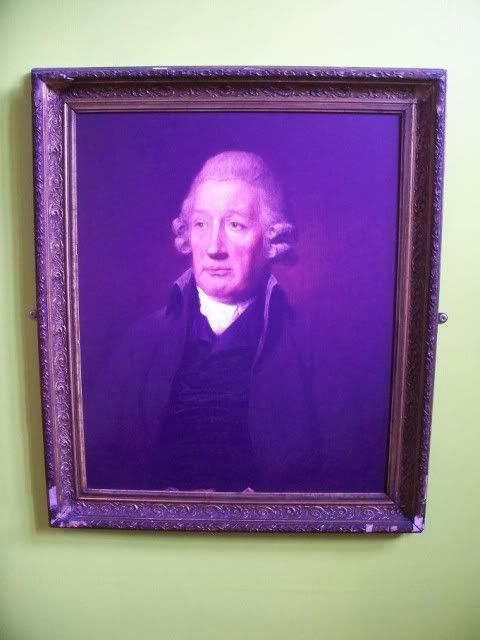
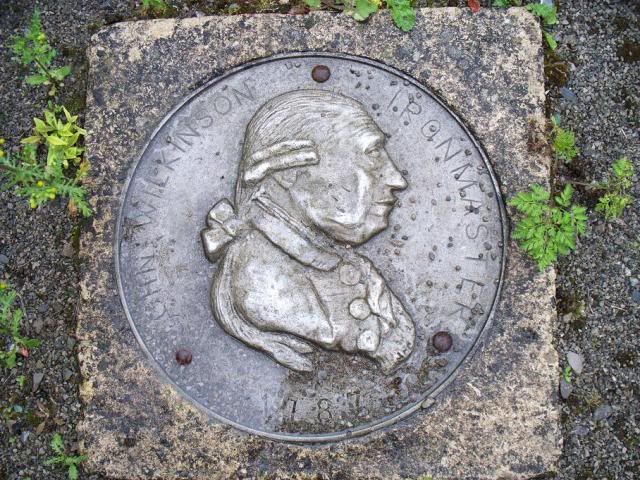
John Wilkinson (1728-1808) was one of the great industrial magnates of the whole revolution. An enthusiastic entrepreneur, wily businessman, and a pretty decent inventor, he was also the brother-in-law of Joseph Priestley, the guy who is credited with discovering Oxygen. As well as Bersham, he had his fingers in many other pies, with ironworks in Broseley (Shropshire) and Bradley, near Wolverhampton, where he experimented with trying to replace coke with raw coal as a catalyst in ironmaking. He bought lead mines in Minera, built a mineral railway between the Wrexham sites, and owned a lead pipe works in London. He was a major partner in the Iron Bridge enterprise, built some of the first iron barges used in the nascent canal network in Britain, and is reputed to be buried in an iron coffin. He was for a long time business partners with Thomas Williams, the 'Copper King' of Parys Mountain on Anglesey. Although he had no connection to the company Wilkinson Sword, founded by Henry Nock in 1772 and which made arms for the King, he didn't do anything to dispel the connection. In later life, he transferred his base of operations from Bersham to Brymbo, where he created an ironworks and a lead smelting plant.
War was prevalent during the eighteenth century, especially following the American War of Independence and the French Revolutionary Wars, and war proved to be a blessing for John. Guns and particularly cannons were, historically, cast in two half-cylinders and then welded together to form the barrel, but imperfections often led to the barrel exploding along the seams when fired, because the ball would stick, doing as much damage to the operator as to the enemy. In 1774, Wilkinson overcame this flaw when he patented his 'boring bar':

This allowed cannon and other ordinance to be cast as a single piece, with the centre bored out. While not particularly innovative in and of itself, the accuracy to which the bore could be drilled led to Wilkinson's cannons being the weapon of choice in warfare. And the late eighteenth century saw Britain engaged in numerous wars, both in continental Europe and the American War of Independence, where Wilkinson sold cannon to both the British and the Americans.
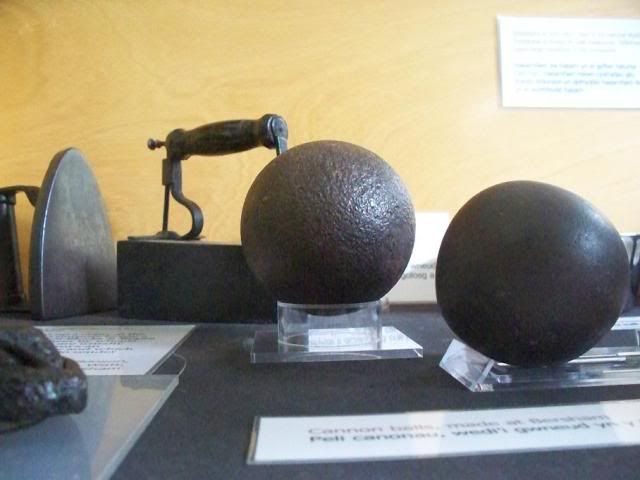
Of course, Wilkinson couldn't rely on war for an income. As luck would have it, he was in place to take advantage of possibly the single most important development made in the industrial revolution: the steam engine!
In the same way that I am no chemist, I am also no physicist, but I will attempt to explain the steam engine as I understand it. The basic design was made profitable by Thomas Newcomen in 1711, which connected a pumping arm to a piston-and-cylinder affair by means of a rocking arm: the cylinder would be heated with steam, which forced the air within to expand and push the piston up. At the top of the piston-stroke, the steam valve is shut off and an exhaust valve opens, which 'let off' excess steam into the atmosphere (hence why these early engines were called 'atmospheric engines', I suppose). The piston would come down, the valves would reverse and more steam was injected, and so we go on. Now. James Watt, called upon to repair a Newcomen engine in the 1760s, decided it was far too inefficient, and so began to tinker with the device. By the introduction of a separate condensation chamber, the excess steam generated when the cylinder was heated was condensed back into water, which lowered the pressure in the cylinder and so pulled the piston back a lot quicker, and the heat generated was used to preheat the water in the attached boiler to create the next 'batch' of steam. This development cut back the fuel requirement and increased the efficiency of the whole process. Further developments made by Watt increased the power by entirely sealing the main cylinder, rather than having it open with the piston acting within. Going into business with the industrialist Matthew Boulton in 1775, the Boulton & Watt steam engine took the country by storm. Why? Because you could now generate power anywhere.
Up until now, industry had relied very heavily on water power, using waterwheels on rivers to turn machinery, with factories and mills springing up all over the riverbanks of England and Wales. Indeed, the ironworks at Bersham were sited here with this precise reason in mind. With the steam engine, however, you could build a mill or factory anywhere. The industrial revolution had been plodding along at a steady pace along these riverbanks until now, making use of whatever local labour available. The steam engine allowed for mills to evolve from these localised affairs into the great cathedrals of industry that we see in the early nineteenth century springing up throughout the north from Manchester to Newcastle. Mills and factories could now be sited in towns and nascent cities, in the the heart of population centres. Because mills could be built in towns, they could be built bigger, and turn a greater profit for the owner. Expansions of the business further down the line would then draw more people to the area, thus creating the great population migrations of the period. Effectively, the steam engine turned the labour market on its head. It was, quite possibly, the biggest bang of engineering until electricity was harnessed effectively nearly 100 years later.
So where does Wilkinson feature into all of this? I hear you shout. Well, I will tell you. Wilkinson was in possession of the most accurate Boring Bar in the country, and in order to create an efficient engine that lost minimal steam, Watt needed accurately-bored cylinders. Well, who better for the job than John Wilkinson? A steam engine was installed at his Broseley works in 1776, one of the first to be used to power machinery other than water pumps (Watt was primarily focused on draining mines, which I shall discuss at length in a future blog).
Wilkinson, being the wily businessman, began selling steam engine cylinders independent of Boulton & Watt, which was at first quite a lucrative sideline for him, until it was discovered that he was selling pirate engines, all of which were forced to be dismantled in favour of genuine Boulton & Watt engines.
All of this industry needed a larger site than John had inherited from his father, and so the works were expanded to the east, further along the River Clywedog. A weir was constructed to help power these works. A weir is, basically, a device installed into the river to alter the flow, the purpose here being to speed up the water flow rate to increase power when it is used to drive water wheels. The east weir at Bersham can be pretty violent, which presumably must have lead to an efficient production.
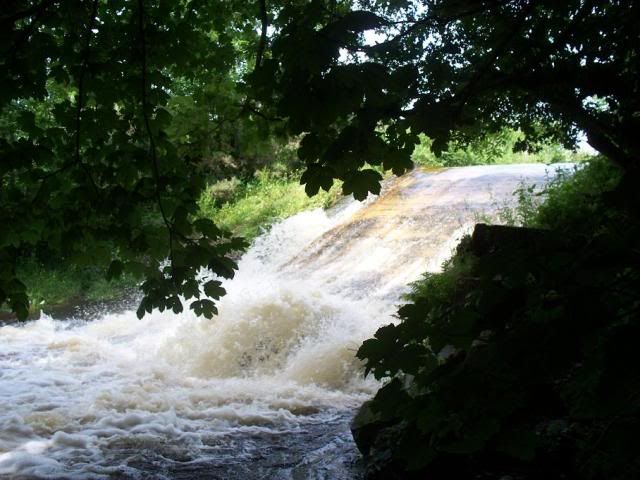
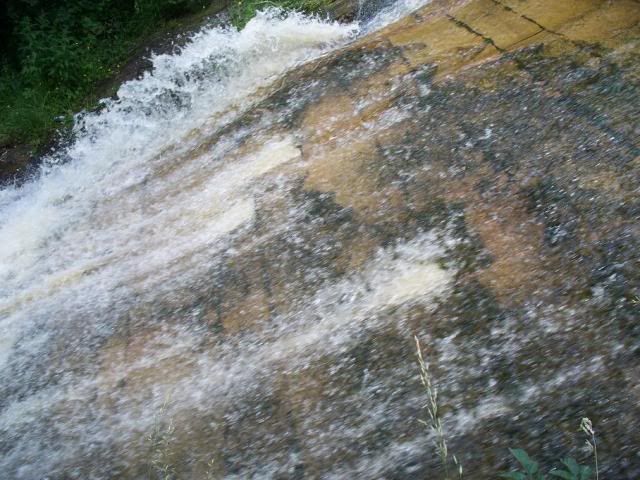
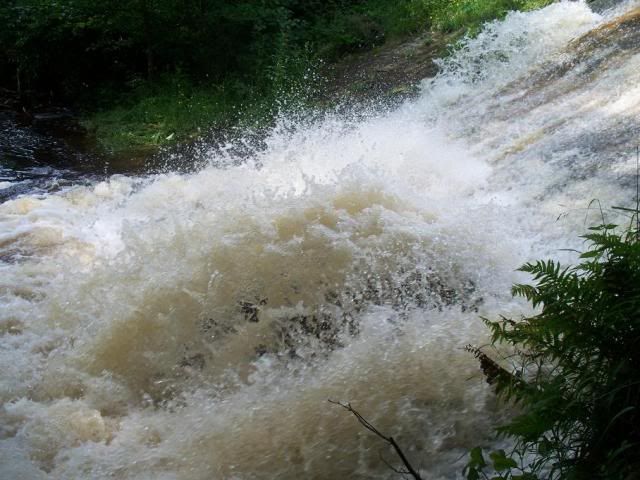
Nothing remains of the east works today, the remnants were finally demolished in the 1960s.
The west weir, by contrast, is a stepped weir, known locally as the 'Russian Steps', purportedly because they were built by Russian prisoners of war. The exact war, however, has never been decided.
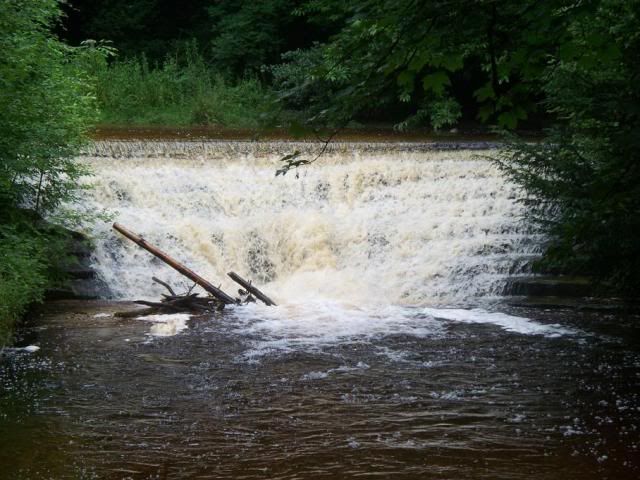
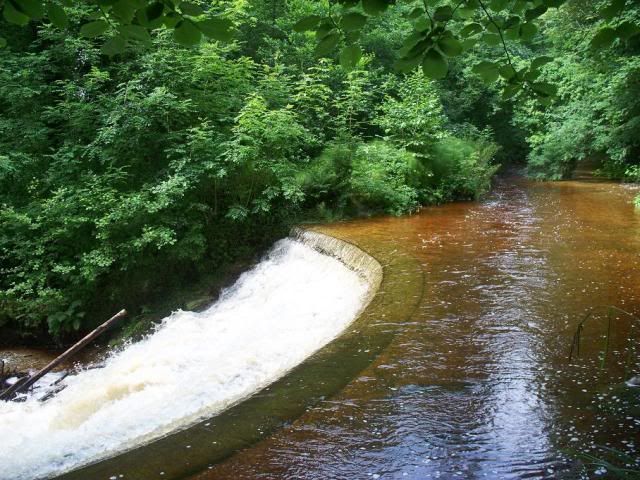
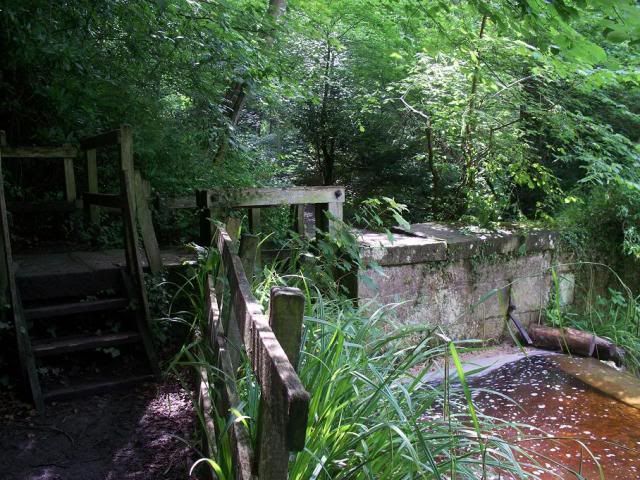
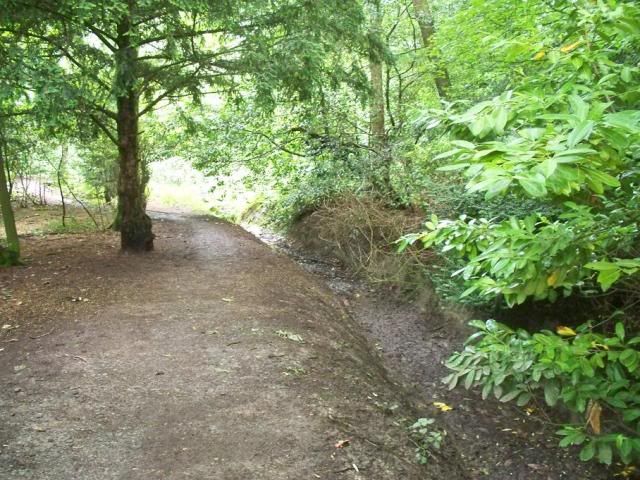
The west weir has a sluice nearby that fed water from the river into a leete that ran to the ironworks. The leete could be emptied by means of further sluices further down, to control the flow and prevent flooding.
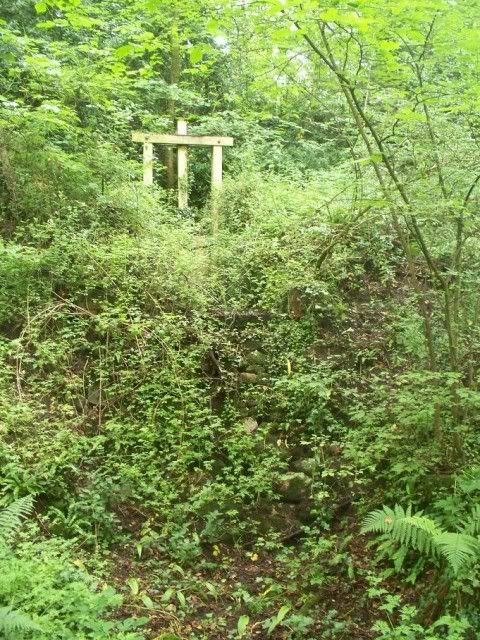
The west works have the most impressive remains at the Bersham site. To start with:
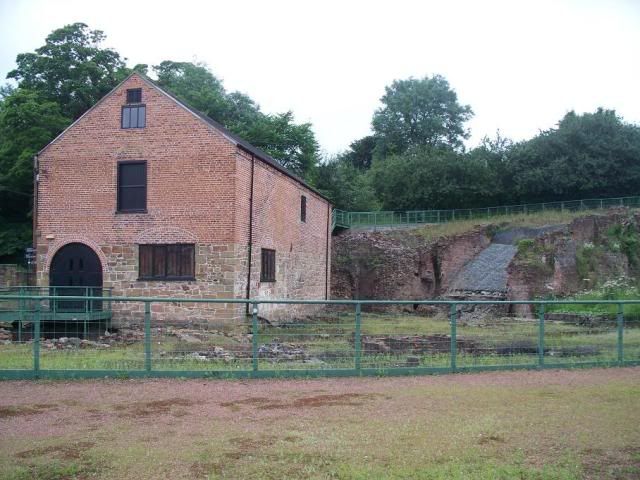
The above photograph is a touch misleading, as the brick structure on the left has actually nothing to do with the ironworks. Try to ignore it for the time being, please! In the centre of this photo we have the blast furnace, with the coal store to the right. The grey-looking area in the middle is the waterwheel pit, which has since collapsed and so is consolidated thus.
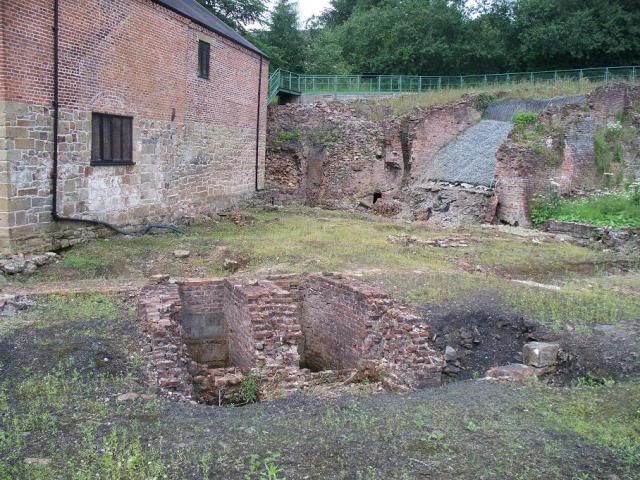
There are numerous air furnaces in the foreground (above) as well, where the molten iron was melted anew ready for casting. Between the furnaces and the brick building are numerous casting pits where this would take place.

The blast furnace has largely crumbled away now (above), but the charging platform can still be seen (below):

The charging platform is basically where the raw materials were tipped into the furnace. To the left of the photo above is the site of the waterwheel pit, the wheel being used to power the bellows that provided the blast for the furnace.
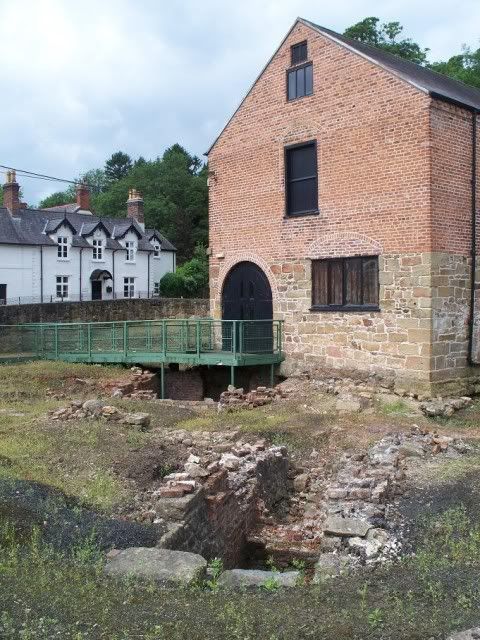
Above shows another air furnace. The white building in the background is the accountant's house.
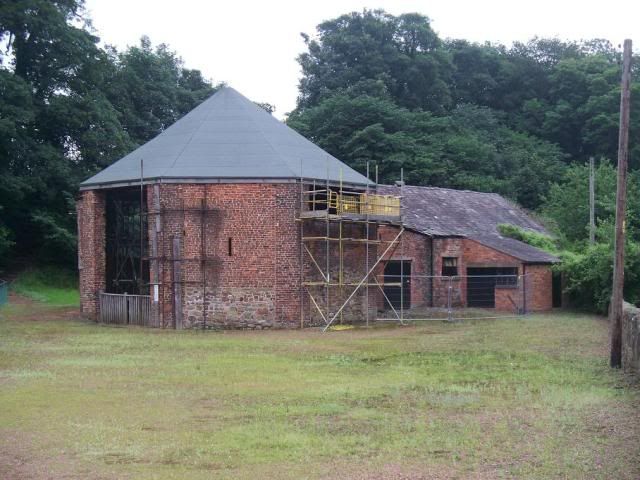
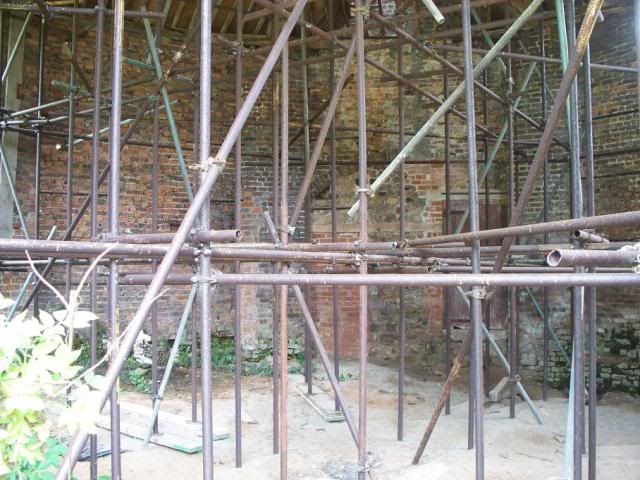
Ah, the pride of Bersham: the Octagonal Building. No-one knows why it was built to be octagonal, but it was in here that the cannon are presumed to have been cast, using 20 tonnes of iron to make a 32lb gun. The building to the rear is the fettling shop, where the cast ironwork would be finished, removing the "fettles". This excess metal would be mixed with the pig iron in the air furnaces for each successive casting.
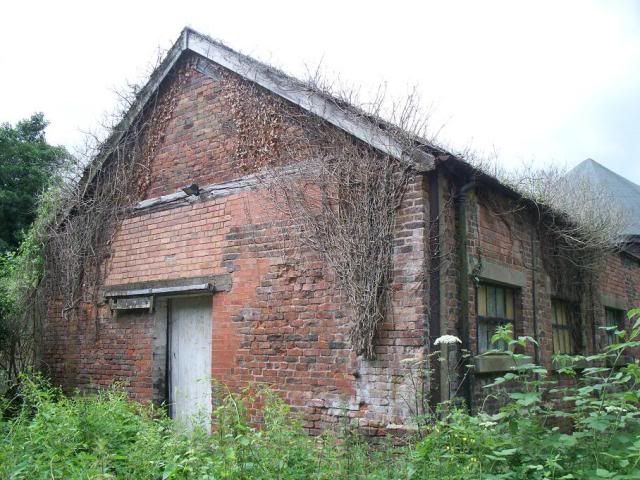
Behind the fettling shop is a lime kiln. Limestone is used in the ironmaking process as a flux to aid in the extraction of the iron from the raw haematite. The limestone was quarried from Minera and brought down the valley on Wilkinson's narrow-gauge tramway.
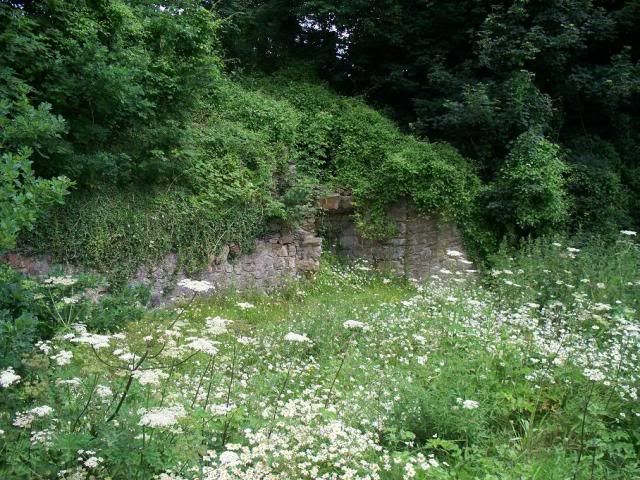
The coal used to make the coke that also supplied the furnace was supplied by the nearby coalmine operated by Wilkinson in Plas Power Woods. We are used to seeing coalmines that have massive headgear and the like, I suppose, but during the eighteenth century, we're talking of coalmining on a much smaller scale - open-cast or bell-pit mining (scraping coal off the surface, and digging a short shaft, then widening that shaft at the bottom, respectively). The deep mines of the later Victorian era and later were actually made possible by the Boulton & Watt engine, but I digress. Wilkinson's coalmine in the woods must not be mistaken for the Plas Power Colliery, which operated elsewhere and on a much grander scale. All that survives of Wilkinson's colliery is the weir in the Clywedog:
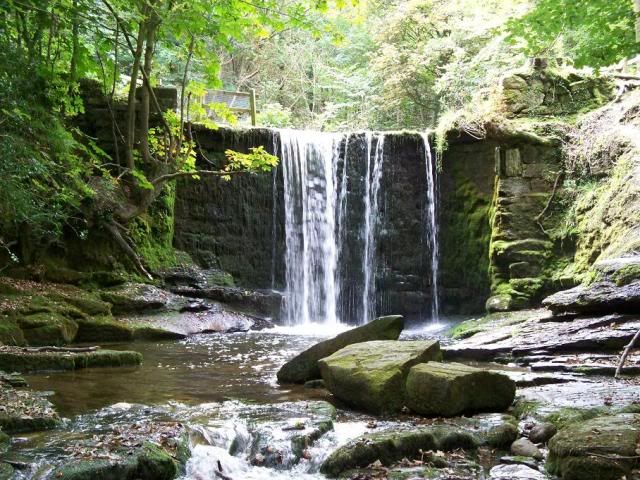
The neatness of the operation has to be admired! I'm digressing again, however.
I'm sure you'll remember I mentioned earlier that Bersham was operated from 1763 by the brothers John and William. Well, what of William? I'm sure you're burning to know. Well, he was largely on the continent, demonstrating the Bersham principle to French ironmakers. In 1792, the now-very-wealthy John purchased Brymbo Hall for £14,000, a couple of miles to the north of Bersham, with the intention of founding a new works. Without William. Well, the brothers quarrelled, and William began to tempt the workers away to his own foundries in Birmingham, while John attempted to run the Bersham works into the ground to escape the terms of his lease of the site. It was because of William that Boulton & Watt discovered John had been selling pirate steam engines. Whether true or legend, it appears that William raised a gang of men to destroy his brother's works, so John, not to be outdone, did the same, and between the two of them, they destroyed most of the buildings. They never spoke to each other again.
The Brymbo Ironworks began with a blast furnace being built in 1793, followed by a second in 1805. Following John's death in 1808, the estate passed to his son, who closed Brymbo when he left for American in 1828. The site was bought by a Scottish conglomerate in the 1840s, and a third blast furnace was installed in 1869. In the 1880s, the ironworks were incorporated into Brymbo Steel Co. Ltd. Coming under progressively wider umbrella businesses, it was eventually nationalised in 1967, closed in 1990, and the site has since been terraformed to create housing for the greater Wrexham area, with only the original Wilkinson works area remaining. There are, apparently, hopes to create a Heritage Area around this area.
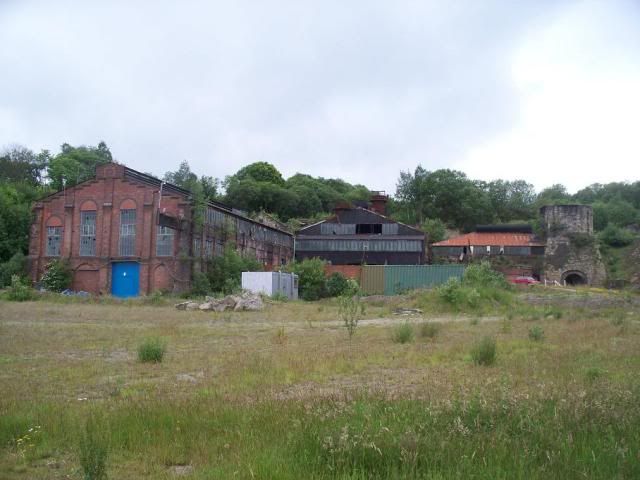
It currently looks a bit derelict, however. The "Old No.1" furnace, which was used as a sand hopper by the steelworks, is still rather grand, and gives the idea of what that at Bersham would have looked like:
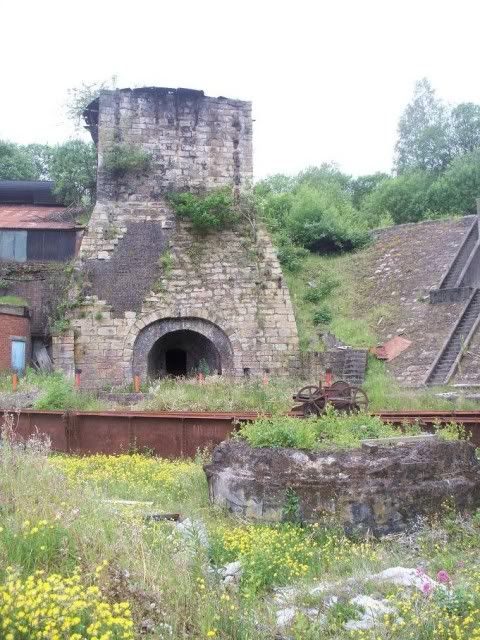

Brymbo, as I fleetingly mentioned earlier, also had a Wilkinson-operated lead smelt. Wilkinson had a lead mine operating up in Minera, Maesyffynon Shaft, which is situated close to the limeworks and used one of the pirate Boulton & Watt engines to drain the shaft.

Smelting lead can be a very noxious business, so smelting plants used a tall chimney to funnel off the fumes in the rough shape of a bottle, hence the name of the monument here, the Brymbo Bottle. Originally over 100ft tall, it was partially destroyed by the army on a training exercise in November 1962, leaving the bottom quarter. A shame really, because this stub is actually all that remains of the entire lead smelt.
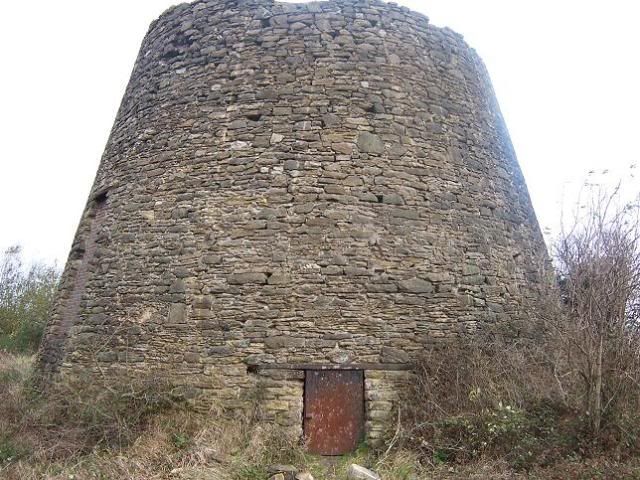
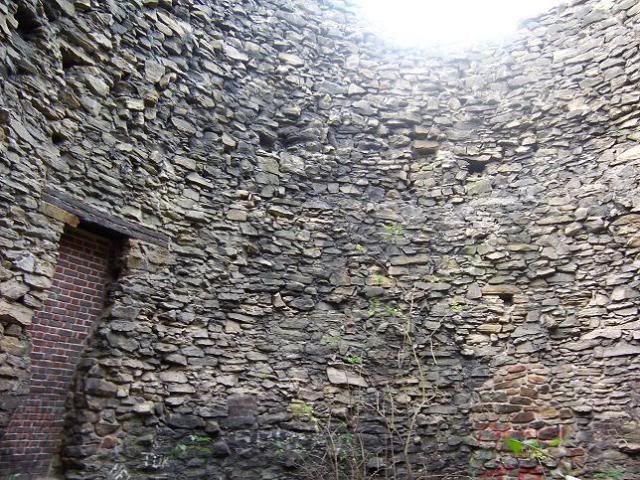
Brymbo Hall, purchased for such a luxuriant sum, no longer survives, having been destroyed in 1973. It was apparently the work of the renowned architect Inigo Jones, so its loss is quite sad really. The site today is just an open field:

To the left in the distance here, you can see the slight lump of Wonder Bank, the slag heap of the Wonder Colliery sunk by the Scottish conglomerate mentioned earlier when they controlled the ironworks.
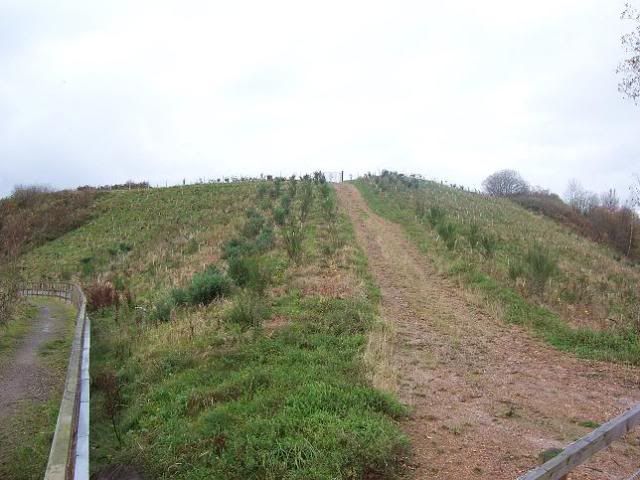
It's nothing special really, it's just a bank of slag. Onwards!
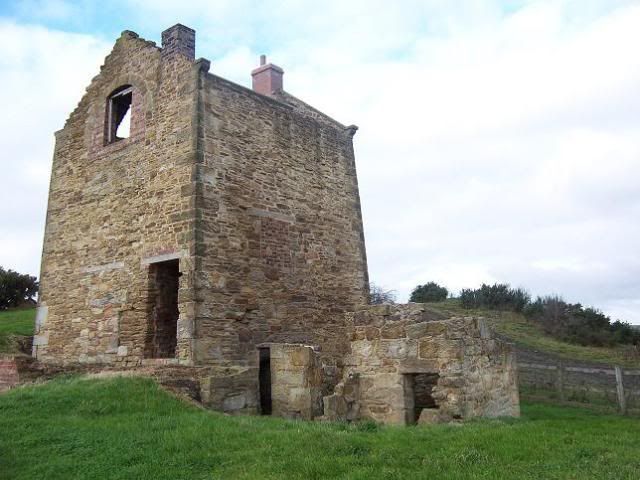
Just up the road from the site of Brymbo Hall is Penrhos Engine House, believed to be the oldest-surviving colliery engine house. Built by Wilkinson in about 1794 to pump water from the colliery he established here to feed his new ironworks, it was later converted into a farmhouse, complete with pigsty off to the side.
So what became of the abandoned, derelict works at Bersham? Well, a corn mill was built on the site in 1828, which is what the brick structure is.

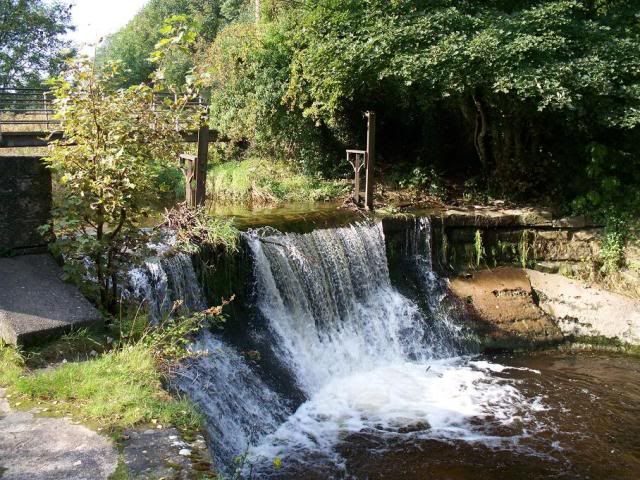
The Clywedog, as I hinted at earlier, was the scene of massive industry before the advent of the steam age, a fact belied by the fact that today the river is quite peaceful, and popular with nature-lovers and the like. The multitude of weirs along its course only hint at the number of mills that sprang up along its banks in days gone by - a leaflet produced by Wrexham Council gives the number at 17. A short walk away from the site of the east works at Bersham brings us to one of the more important such mills, Turkey Mill. A paper mill renowned for its fine quality paper, it was contracted by the Government Stationery Office to make paper for bank notes and cheque books. There is an enlightening document from a survey of the workers at the Turkey Mill, which shows that the workforce of primarily young girls and boys were paid between 1 and 3 shillings for the week's work (12 hours a day, six days a week). The Mill came out with a fairly decent review in the Children's Employment Commission Inquiry of 1843, although when the Factory Acts were applied to the paper mills in 1867, conditions improved a lot more. Well, until April 1897, when the factory burnt down. All that remains today is the weir:
(My thanks go to Mr R Knabel of Martha's Vineyard for the explanation of the steam engine).