Showing posts with label Welsh history. Show all posts

Tuesday, 8 July 2014

Edward I and the Conquest of Wales

Afternoon everyone!
I've been thinking a lot recently about Edward I, particularly having been on a recent tour of the four great castles he built in Wales during the later fifth of the thirteenth century. As a Welsh person myself, it always seems slightly incongruous that I would like a king that so subjugated my native land, but like him I do, nevertheless! So today's blog will be an effort to see just why, among the shadows of the Conquest of Wales.
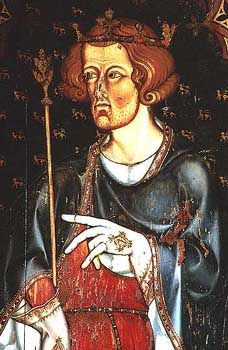


The man has had some bad press, perhaps understandably, from the vicious ways in which he dealt with uprisings in both Wales and Scotland. Of course, this bad press stems from historians native to those areas, who will perhaps inevitably be a bit biased. English historians are usually a bit better at presenting a balanced view of the man, praising his reform of the legal system and establishment of parliament as a permanent fixture. If you haven't already done so, I can massively recommend reading Marc Morris' excellent book A Great and Terrible King. I am, admittedly, not the biggest fan of Morris' work, but his survey of Edward here is just second to none! 

Edward was the eldest son of Henry III, whose reign is often described as 'disastrous' because of the perception that he was a weak ruler. I personally find Henry to be a very likeable chap. I sometimes feel that he was born too early - had he been king of England four or five hundred years later, he would perhaps have been one of the most popular monarchs the country had ever seen. That such a pious and generous man was given England to rule when it needed a much stronger king is his supreme accident, therefore. After some early failed military exploits, Henry revealed himself to be something of a skilled diplomat, but the middle ages wanted more teeth in their rulers, and Henry's son Edward soon came to overshadow his conciliatory father. 

Henry's 'fatal generosity' was eventually to spark off the Second Barons War, also known as the de Montfort Rebellion, which raged throughout the 1260s and, at one point, effectively deposed Henry as king. Prince Edward led the king's army at the Battle of Evesham and defeated de Montfort, and one gets the impression that Edward was somewhat unhappy with his father's rule. 

Henry III died in 1272, while Edward was on Crusade, so that the coronation didn't take place until two years later. Contemporary accounts describe it as an extremely lavish affair, with everyone who was anyone present for the festivities, except the Prince of Wales...

Edward was a very tall man for the age, standing at 6ft 2in (when the average male of the time was around 5ft 6in). He also had a famously bad temper, and these two facts made him appear particularly frightening to his contemporaries. Despite this, however, he was also a devoted husband to his queen, Eleanor of Castile, and is one of the very few medieval monarchs known to have never had extramarital affairs. When Eleanor died at Lincoln in 1290, Edward was distraught and erected crosses to mark each resting place of her funeral cortege between Lincoln and London, the most notable being Charing Cross. For all his fearsome reputation, Edward adored his wife.


^ the viscera tomb to Eleanor in Lincoln Cathedral

^ the (restored) Eleanor Cross outside Charing Cross Station in London

But a strong and powerful king was precisely what was needed at this time, and Edward almost immediately set about consolidating his position lest another 'disastrous' reign occur. First priority was the Tower of London. Back when William I built it, it was meant to be a symbol of royal authority, a stamp on the English capital that should dissuade any from rebelling against the might of the king. But rebellions against the king had happened, to both Edward's father and grandfather, so Edward set about making the Tower even more frightening, with a much bigger footprint and bang up-to-date concentric defenses. 
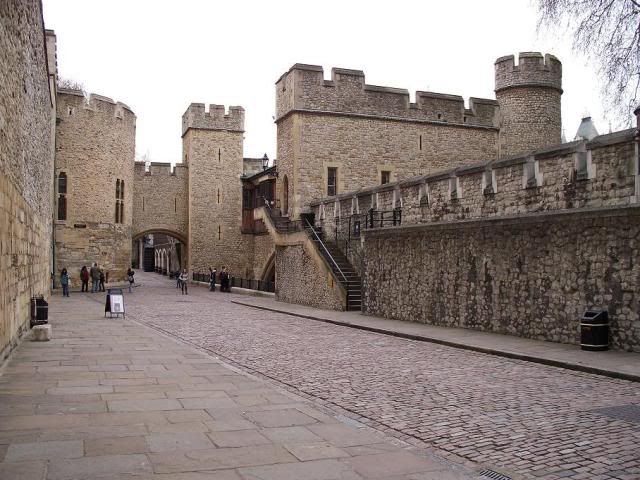


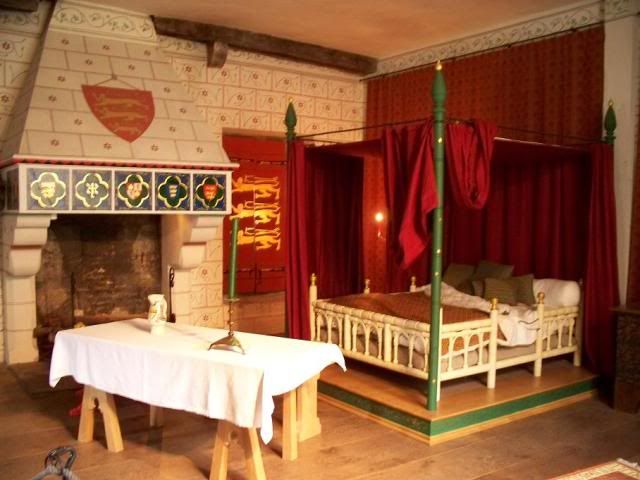
^ as well as fortifications, Edward set about making the Tower an even more opulent royal palace

The perceived slight by Llywelyn ap Gruffudd in not attending Edward's coronation is one of those moments in history that leaves me shaking my head in despair. It also has a massive history of its own. As you may or may not know, the princes of Gwynedd had often been belligerent in conquering lands outside of their Snowdonia heartland, with Llywelyn 'the Great' occupying lands well into Shropshire as well as far south as Pembroke. However, they had always remained princes of Gwynedd. Llywelyn's grandson, Llywelyn ap Gruffudd, achieved a major coup when he used Henry III's preoccupation with the de Montfort rebellion to make significant conquest of the king's lands in the Welsh March, destroying the royal castles at Dyserth and Deganwy in the mid-1260s. 


^ the ruined curtain wall of Deganwy Castle, high above the Conwy estuary

While Prince Edward was enraged, the king was by now well into his diplomat years, and made peace with the Welsh at the Treaty of Montgomery in 1267, where Henry demanded Llywelyn return lands he had taken in the Welsh March, but in return he would recognise the Welshman as Prince of Wales, ceding all homage required of the nobility in Wales to Llywelyn in return for homage from the newly-recognised Prince himself. Llywelyn agreed, naturally, and became the first and only officially-recognised Welsh Prince of Wales. Edward cooled in his animosity to Llywelyn, perhaps in grudging respect for his father's diplomacy? Not everyone was happy, however - the powerful earl of Hertford and Gloucester, Gilbert de Clare, had received the Lordship of Glamorgan in 1262, and Llywelyn's new status made him a vassal of the Prince, who almost immediately set about invading de Clare's lands. de Clare was one of Edward's staunchest supporters following his change of allegiance from Simon de Montfort to the king in 1265, and acted as one of the Governors of England between the death of Henry and the return of Edward from his crusade. He had become one of the most important nobles of England following the rebellion, and he knew it. His magnificent fortress at Caerphilly attests to his might as a Marcher Lord, as well as perhaps how strongly he opposed Llywelyn.


Conflict with the Marcher Lords was in addition to internecine intrigues. Llywelyn's brother Dafydd had been part of a plot in 1274 with Gruffydd ap Gwenwynwyn, lord of central Powys and newly subject to Llywelyn, to assassinate the new Prince of Wales. When it failed, both Dafydd and Gruffydd fled to London and the protection of Edward. Therefore, when Edward requested Llywelyn's presence in the English capital to pay him homage as his new king, Llywelyn cited Edward's protection of his enemies and refused. Oh dear.

There's yet another strategic blunder to be mentioned, that of the construction of Dolforwyn Castle in 1273. Built following the success of the Treaty of Montgomery, Llywelyn sought to consolidate the approach to his lands along the River Severn, but unwisely chose a site four miles from the royal castle of Montgomery. Furthermore, as a vassal of the king, Llywelyn should have sought permission to build a fortified structure, but he did not. Yet another snub to Edward's position as his feudal overlord. 


^ view across the central courtyard of Dolforwyn Castle from the keep

One can perhaps easily imagine the towering rage Edward would have been driven into, as he declared war on Llywelyn in 1276. When the English invaded the following July, it was with a force of 15,500 - of which nearly two-thirds were Welshmen. Says a lot for the character of Llywelyn, wouldn't you say? 

Edward marched across the north Welsh coast from Chester, establishing bases as he went in both Flint and Rhuddlan, where castles were established to stamp his authority on the land. The English met the Welsh at the Rivery Conwy, in the shadow of the former royal castle of Deganwy, late in 1277. 


^ Flint Castle, with the great keep in the foreground

^ Rhuddlan, one of the great concentric fortresses of Edward's reign.

Llywelyn wasn't entirely stupid, however, and realised he needed to make peace with Edward. He surrendered at Aberconwy Abbey in the November, and under the treaty signed there ceded all of his lands except the principality of Gwynedd (which stretched far across north Wales to the border with Cheshire at this time), but kept his title of Prince of Wales. In order to keep the Welsh in check, Edward began building two royal castles, at Aberystwyth and Builth - both heavy with the symbolism of royal authority and loudly proclaiming to the Prince "England is watching". 


^ Aberystwyth Castle, the great gatehouse

^ Builth Castle, only the earthworks remain

The first Welsh campaign shows Edward as a decisive military commander and an exceptionally strong ruler. In contrast, Llywelyn emerges as a fish out of water, and he has always bemused me by thinking he could ever take on the English when his hold on Wales was, at best, quite tenuous. Llywelyn ap Iorwerth had often conducted aggressive foreign policies into England, but he had never neglected to consolidate his own standing in Wales - his grandson would have done better to have learnt from that. I get the sense, therefore, that Llywelyn is justly deserving on the rap on the knuckles that the 1277 campaign turned out to be. Of the two rulers, Edward is by far the one worthy of respect here. 

1277 was only the beginning, of course. Under the treaty of Aberconwy, Edward had given lands to Llywelyn's brother Dafydd in what is now central Denbighshire, centred largely on the Clwyd Valley. Hardly prime real estate, Dafydd was unhappy, and succeeded in rousing the lords of Powys and Deheubarth against the English, who had appropriated much of central Wales into the March following the treaty. This rebellion of 1282 is usually described as a nationalist uprising, a war for survival and a war for Welsh national identity. To be honest, I find that hard to deny, because it was very much a Welsh vs English conflict, as opposed to the 1277 campaign that had included so many Welshmen on Edward's side. 

One of the major points of contention was the enlargement of the March to engulf the ancient kingdoms of Powys and Deheubarth, and the subsequent imposition of English law on those lands. Welsh law and tradition differed markedly to English in many areas, perhaps principally inheritance laws. The Welsh chafed at this, and rose up in revolt. While I would still maintain that the 1282 revolt has its roots in essentially a land dispute by the jealous firebrand Dafydd, it nevertheless became a national struggle, as much as one can define Wales as a nation at this point. 

At Easter 1282, Dafydd attacked the English stronghold at Hawarden, sparking the revolt. Edward's response was characteristically heavy-handed. A three-pronged attack was launched between Gilbert de Clare in the south (from Carmarthen); Roger Mortimer from Shrewsbury, and the king himself from Chester. Edward's intention was undeniably to crush the Welsh once and for all. Should I be annoyed by this? I am Welsh, after all. But I'm not - to a large degree, I feel the pugnacious Welsh brought it on themselves by trying to defeat a superior force. I'm more dismayed for the Welsh than I am annoyed by the English. 

Welsh victories came quite quickly, when Gilbert was defeated at Llandeilo Fawr in June, following the English capture of Carreg Cennen Castle. His command of the southern army was relinquished to William de Valance, the Earl of Pembroke, the half-uncle of Edward, who led a much more successful campaign against the Welsh. 

Later in the year, Anglesey was captured from the Welsh, including the symbolically important llys at Aberffraw, by Luc de Tany, the Seneschal of Gascony and another staunch ally of Edward. However, Luc's victory was short lived, when he overreached and marched onto the mainland before waiting for Edward's army to cross the Conwy and support them. Llywelyn decimated de Tany in November, setting back Edward's plans for a crushing victory in the north. 

However, Llywelyn was perhaps emboldened by his victory over the English, and marched out of Snowdonia to rally support in mid-Wales, believing the Marcher Lords were wavering in their support of Edward. He could not have been more wrong, as these Lords numbered among some of Edward's strongest allies. Also arrayed in mid-Wales was Llywelyn's old nemesis Gruffydd ap Gwenwynwyn, who threw his support behind the Marcher Lords. 

Llywelyn was cut down at Cilmeri, near Builth, on 11 December 1282, and his head cut off and sent to London, where it was mockingly adorned with a crown of ivy ('fulfilling' a Welsh dream that Llywelyn would be crowned in London) before being set on a spike on Tower Bridge. The Welsh thereafter rallied around Dafydd.


^ the memorial to Llywelyn the Last at Cilmeri.


Edward took advantage of the Welsh setback to march into Snowdonia in January 1283, where he swiftly captured Dolwyddelan Castle and Criccieth Castle, followed quickly by de Valance's capture of Castell-y-bere in southern Gwynedd. Dafydd managed to hold out until June, when he was finally captured at Dolbadarn Castle and imprisoned at Shrewsbury. 


^ Dolwyddelan Castle (the crenellations are Victorian), the ancient stronghold of the Princes of Gwynedd


^ Criccieth Castle, later rebuilt by the English

^ Castell y bere, view across the courtyard into Snowdonia


^ Dolbadarn Castle, deep in the heartland of the Princes of Gwynedd

Dafydd was tried at Shrewsbury and condemned to death on 30 September, the first recorded person condemned for high treason. The now-infamous capital punishment of hanging, drawing and quartering was devised by Edward as Dafydd's punishment for his role in the rebellion, and was carried out at Shrewsbury on 3 October, whereupon his head was sent to London to join that of his brother. His daughter was sent to a convent in Lincolnshire (along with Llywelyn's only daughter), and his sons were imprisoned at Bristol Castle. 

With the death of Dafydd, Edward immediately set upon building a series of fortresses surrounding Snowdonia in an 'iron ring', as well as granting land across north Wales to his favourites for them to build yet more castles there. Edward's four great castles of Conwy, Caernarfon, Harlech and Beaumaris are all fearsome symbols of English royal authority in the land. 


^ Conwy Castle, the outer ward. The first to be built and originally planned as the seat of royal authority, perhaps in recognition of the 1277 Treaty of Aberconwy?

^ Caernarfon Castle, built to emulate the imperial walls of Constantinople, occupies a site heavy with Welsh legend

^ Harlech Castle, keeping watch over lower Gwynedd 


^ Beaumaris Castle on Anglesey, the last of the four to be built and never finished due to a depleted treasury

The castles of the noblemen granted lands across north Wales are no less impressive.

^ Denbigh Castle, built from October 1282 by Henry de Lacy, Earl of Lincoln and Baron Pontefract

^ Hawarden Castle, rebuilt from 1297 

^ Holt Castle, built between 1282-1311 by John de Warenne after Edward had made preliminary fortifications in 1277

^ Ruthin Castle, built by Reginald de Grey from 1282 on the site of a castle built by Dafydd in 1277


^ Chirk Castle, built by Roger Mortimer and the only surviving, inhabitable castle left from the Edwardian Conquests

Many of the English castles were planned with boroughs adjacent to them, such as at Conwy and Caernarfon, Denbigh and Ruthin, but under the terms of their charters, no Welsh person was allowed to live or trade within the walls. These laws remained in effect, though perhaps not in execution, until the Tudor period over two hundred years later. The king's favourite mason, Master James of St George, was commissioned to design most of the castles to be at the cutting edge of military design, employing many continental innovations that were otherwise unheard of in Wales at this time. 


^ Edward I (centre) instructing Master James (right)

The result of the conquest was a massive land-shift that is not hyperbolic to compare with the Norman Conquest over two hundred years previous. Welshmen were suddenly dispossessed and at the mercy of English lawmakers, who rarely understood the traditional rights of the land, let alone the language. In this sense, then, Edward's conquest of Wales was very much an apocalyptic event in the history of the nation. The investiture of Edward's son, the future Edward II, as Prince of Wales in 1301, provided a further snub to the Welsh by instituting a progression of 'alien' Princes, although Prince Edward was actually born within the confines of Caernarfon Castle in 1284.


^ Edward I bestows the title of Prince of Wales upon his son, Edward of Caernarfon

And yet, I still like Edward I. No matter how much one might want to characterize him as a barbarian, he was an extremely effective ruler, who would brook no challenge to his regnal power. At this period of history, the country needed a king who could stand up to these challenges, as the anarchy of the Barons Wars had shown. It is, seemingly, the curse of any effective ruler to be thought of as ruthless (Thatcher, anyone?) without looking into the reasons behind those actions, or indeed looking at the long-term results. It is entirely possible that, had Llywelyn managed to rein in his brother, the cataclysmic war of 1282-3 would not have come to pass; it is entirely possible that, had Llywelyn recognised Edward as his feudal lord in 1274, the campaign of 1277 would not have come to pass. Llywelyn the Great knew how far - and when - he could push his expansionist foreign policies, but Llywelyn the Last did not, and as such I have no sympathy for the man, who brought about his own destruction, and that of the principality he had stove to create.

Feudalism is an extremely important concept during the high middle ages, and it would take centuries for the ideas to die out. I have tried to emphasize throughout this blog that, under the Treaty of Montgomery, Llywelyn was created a vassal to the king of England, and by all accepted customs and rights of the day, he must pay homage to his feudal overlord or his lands would be forfeit. Llywelyn did not pay homage when it was demanded, and therefore reneged on his part of the Treaty. As such, Edward was entirely within his rights, in a feudal society, to take back the lands of his wayward vassal. Llywelyn disobeyed societal norms for the time. That is not Edward's fault. Edward acted in the manner a thirteenth century king was supposed to react, and Llywelyn just couldn't cope. 

And thus, I dismount my soapbox! 

Edward I was an extremely capable king, who ruled effectively when the country so desperately needed a strong king. He also had the right men around him, not least Robert Burnell as Lord Chancellor, who headed-up the legal reforms of the realm. Edward's father had been a relatively weak monarch, and his son was to prove to be even more inane, but it wasn't until Edward III that we'd see another medieval monarch so successful at the top job. 

Tuesday, 27 November 2012

Ah, Shropshire! (part three)

Yes indeed, it's well past time we got on to part three of my summer of Shropshire, given that winter is now just around the corner! This time, we're headed for the south and the west, with a bit of cross-border travel just to add a bit of spice. So I present: Ah, Shropshire! (part two)

To start with, I'd like to take you to the town of Montgomery, which is now in Wales but was recorded in Shropshire in Domesday Book (as 'Muntgumeri'), where a castle is mentioned in the lands of Earl Roger. This is the motte-and-bailey castle now known as Hen Domen, about a mile away from the modern town. Earl Roger, the first Earl of Shrewsbury, was of course Roger de Montgomerie, who built the castle around 1071. It didn't take long for the castle to pass to the crown, however, when Roger's son forfeited the lordship. I'll cover this in more detail when we get to Shrewsbury in a future blog. The lands were given to Baldwin de Boulers, from whose grandson (another Baldwin) the town of Montgomery gets its Welsh name - Trefaldwyn, or Baldwin's Town. Hen Domen has an interesting history, being given to the Prince of Powys by King John in an effort to forge an alliance. John, famously mistrustful of everyone, later gave it to the Prince of Gwynedd, Llewelyn ap Iorweth (the Great), who you'll remember married John's daughter Joan (as previously mentioned). However, when Henry III succeeded his father in 1216 and began the long period of tense relations with Wales that ended with the Conquest of the later thirteenth century, Hen Domen was relegated to the position of outpost for a new stone castle. Llewelyn  besieged Builth in 1223, the action precipitating the building of this new castle at Montgomery. 


The new castle here was built to current military fashion of a series of wards, rather than the multi-level motte-and-bailey design. With the "ward castle" (I don't know if that's the proper name, I have to admit), the whole thing is built on a strongly defensible position, usually on a high rock escarpment such as at Montgomery, so you can defend the castle as a whole, rather than falling back to a much more strongly defended keep high above your bailey. This same design is one employed by castles of the Conquest such as Conwy and Caernarfon. 


^ the outer gatehouse, with the outer ward and inner gatehouse beyond.

The castle was designed to be impregnable, a border castle with a job to do - repel the Welsh. Work was begun almost immediately following the siege of Builth, and left in charge of the king's justiciar Hubert de Burgh, a seasoned veteran of siege warfare at Chinon, in France, and Dover. Llewelyn, not particularly keen on having such a man on his doorstep, attacked the nascent castle in 1228, and while he didn't stop the building work, he does appear to have "humiliated" Hubert, as the guidebook tells us. He attacked again in 1231, and again didn't do much to the castle, but did raze the town that was growing up outside. 


^ inside the inner ward.


^ view of the northern edge of the town, with the Shropshire plains beyond.

Llewelyn died in 1240, and left behind him no clear, strong leader. By 1254, Montgomery Castle was completely encased in stone, and must have been a forbidding warning to any cross-border raider. However, in the 1260s, Llewelyn's grandson, another Llewelyn (known as the Last), began manoeuvres that led to the downfall of Wales as a separate entity. He set about strengthening his position as his grandfather's heir to the claim to be 'Prince of Wales', a title that was actually recognised by Henry III in 1267 in exchange for homage from Llewelyn, which was accepted. This agreement was called the Treaty of Montgomery, and was signed near to the castle. 


^ the outer curtain wall.


^ the outer ditch.

However, this accord wasn't to last. Upon the death of Henry III, his son Edward I succeeded to the throne. A towering brute of a man (6ft 2in was tall for a chap of the middle ages, where average height was nearer 5ft 6in), he demanded homage of Llewelyn, who pugnaciously refused to recognise Edward's authority in his lands, a slight Edward refused to let pass. This whole subject is altogether too fascinating to gloss over here, but I promise you a further blog that will look into the Conquests of Wales very soon! Suffice it to say, Edward invaded, defeated Llewelyn, and Montgomery was an important staging area for the English troops. 

Following the first stage of the Conquest in 1277, Montgomery was invested with a town wall in stone, part of which has been reconstructed to how it is presumed to have looked back in the day:


The town was established in 1223 also, and the King encouraged traders by allowing them the same freedoms within the town as they enjoyed at nearby Shrewsbury. In 1227 it was given a royal charter based on that at Hereford. Using these two cities as precedents seems to give the impression that Henry III had big intentions for Montgomery as a major town of the March. 


^ the town centre today.

Unfortunately, these plans never seemed to work out. Following the Conquest, the lands in this area were given to Roger Mortimer, presumably for his sterling work during the Welsh wars. Mortimer proceeded to make the nearby castle at Dolforwyn a baronial seat, and Montgomery remained a royal castle - albeit one which, by 1310, was already showing signs of serious neglect. The Mortimers, of course, will be familiar from a previous blog. It wasn't until later in the fourteenth century that Montgomery appears to have been rejuvenated, finds from the period including lavish stained glass. During the Glyndwr Revolt of the late fourteenth-early fifteenth centuries, Montgomery Castle was garrisoned for the King. From about 1408, however, the excitement was over and a routine returned. 

The Mortimer holdings were inherited by Richard, the Duke of York, in 1425, the man almost single-handedly responsible for the Wars of the Roses. The castle reverted to the Crown following Richard's forfeiture, in 1490 it was granted to Arthur, Prince of Wales (Henry VIII's brother) while he resided at Ludlow Castle. Through Arthur's Constable - Sir Charles Somerset, Lord Herbert - Montgomery Castle began its association with the Herbert family, of Raglan Castle (you know the ones, right?)


^ the inner gatehouse from the ditch.

The Grammar School at Montgomery was possibly founded in the fourteenth century. Grammar Schools were intended for the instruction of Latin, hence the name, where pupils were educated up to the age of 14, whence they would continue on into university, or else look to the Church. Following the Dissolution, the grammar school system became more widespread as a replacement for Church-funded education, until eventually the Victorians absorbed the schools into the more familiar form of school we know today, although the name was retained. 


During the Dissolution of the Monasteries, Montgomery Castle was undergoing a series of renovations, and the nearby Chirbury Priory was robbed for building materials to effect these repairs. A whole host of lodgings was built in the middle ward, though by the end of the sixteenth century these were apparently in a poor state of repair once again. Early in the following century a wonderful brick Jacobean house was built in the middle ward, L-shaped and fabulous, from the sounds of it, though it was only standing for about 25 years. There is a wonderful story of the then-Lord Herbert, a chap called Edward, who had retired from the diplomatic service to live in the house, held the castle for the King during the Civil War, but refused to allow Prince Rupert to garrison it with soldiers, instead relying on his own household to do the job. You can just imagine the sort of bluff old aristocrat arming his personal servants with household implements and such! Maybe that's just me, though...
During the Civil War, the castle was besieged by Parliamentarians under the command of Sir Thomas Myddleton (of Chirk Castle), and while Lord Herbert initially tried to negotiate his way out of things, Lord Byron arrived with Royalist relief, precipitating the Battle of Montgomery on 18 September 1644 in a field below the castle ridge.


The Royalists were soundly defeated, and Lord Herbert left to live out his days in his London home, where he died in 1648. After the Parliamentarian victory the following year, the Castle was slighted, the work being financed personally by Herbert's heir Colonel Herbert as a kind of fine for his 'delinquency' in supporting the King. The brick house as well as the medieval castle were destroyed, though rather more remains of the stone than the brick - perhaps because, at this time, brick was a fashionable material and linked with the urbanity of the big city, so was more desirable for anyone looking to rob-out the remains. Anyway, whatever the reason, not much remains of the historical record following the Civil War, the castle oddly being missed off the map of the Romantic movement, even though the remains today are quite striking. 


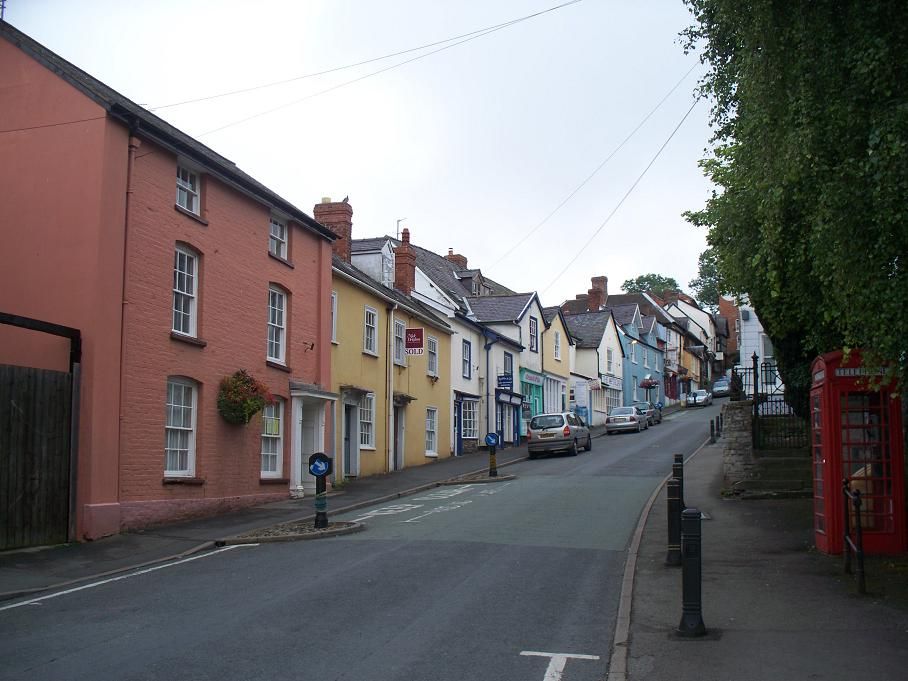
Getting firmly into Shropshire, I'd like to take you first to Bishops Castle. It's a lovely little market town in the south of the county, with some very colourful and truly wonderful survivors of the medieval age. 


The name of the town comes from a castle built on top of the hill in 1087 by the Bishop of Hereford, Robert of Hereford, on lands given to the See in Saxon times. The original motte and bailey castle was rebuilt in stone starting in 1167. Many Shropshire castles were refortified during the reign of Henry II, perhaps in response to the strife between the King and the Archbishop of Canterbury, Thomas Becket, or between the King and his sons later in his reign. Either way, it was very helpful, as the area was to see increased incursions from the Welsh during the reigns of John and, later, Henry III. 


^ the view across the top of the motte today.

The castle was attacked by John fitzAlan in 1281, the Earl of Arundel and Lord of nearby Clun (more in a bit), but was repaired and continued to remain a possession of the Bishop of Hereford until the seventeenth century, when it began to fall into disrepair. The castle gradually decayed until all that remains today is a fragment of wall from the outer bailey:


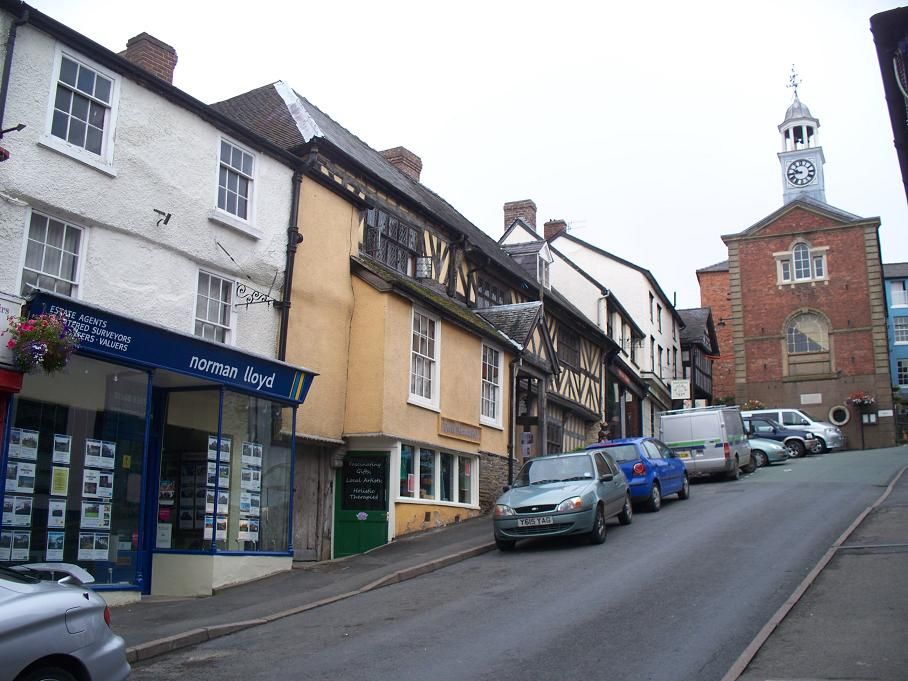
Around the time of the castle's deterioration, the town obtained its town hall at the top of the High Street, which was apparently also used as a prison at one point.


^ the town hall, to the right of the photo.

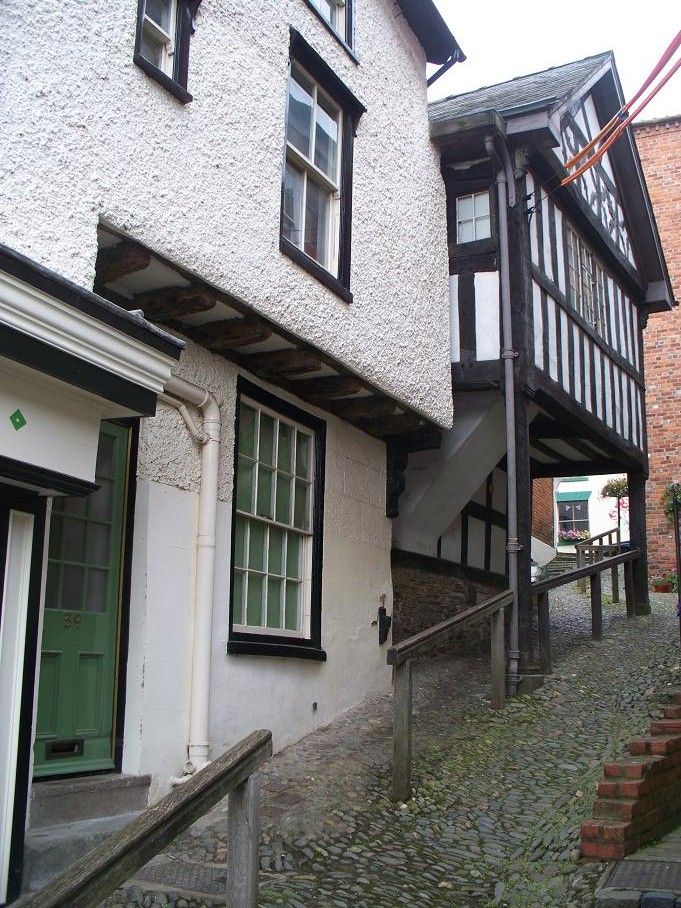
Near to the town hall is also the famous 15th-century 'House on Stilts', a necessity because of the steep incline the town is built upon:


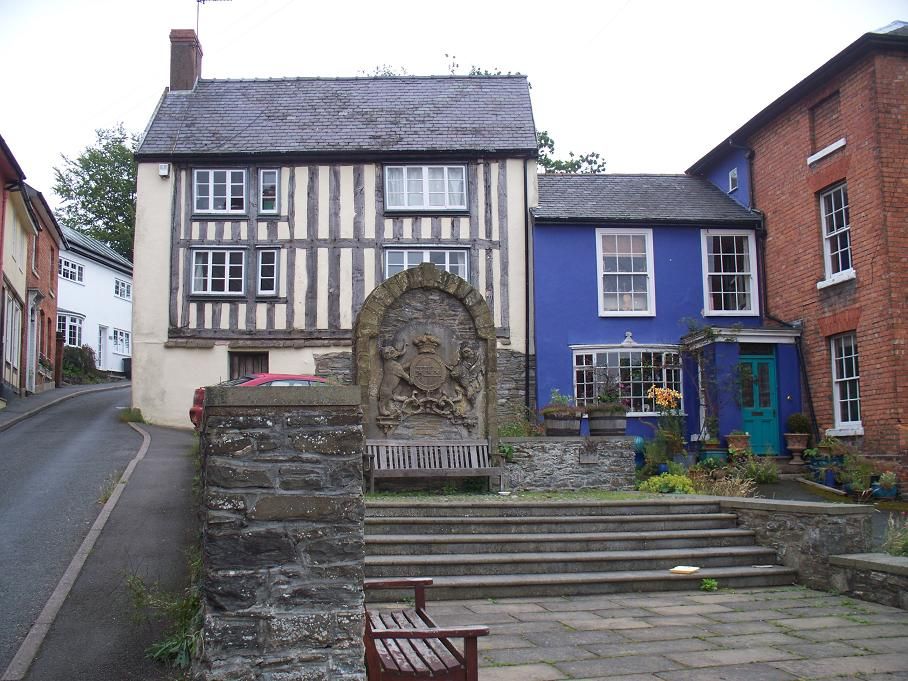
Bishops Castle was once England's smallest borough, and also one of the great rotten boroughs of the eighteenth century, returning two MPs to parliament while the town only had 183 voters. I love the term rotten borough - in fact, I love the period of political reform in the UK, so I may go on a bit here! Basically, in medieval Britain, a borough was a town established by Royal charter with the right to return two MPs to parliament, or burgesses, at each election. As population centres shifted over history, these political boundaries did not, and as the eighteenth century wore on it became increasingly untenable. Old Sarum, in Wiltshire, is perhaps the most famous of all the rotton boroughs - following the foundation of the cathedral city of Salisbury nearby, Old Sarum continued to return MPs based on the medieval system, so that it would eventually wind up returning two MPs for 7 voters. The Great Reform Act of 1832 abolished all 57 rotten boroughs and redistributed the MPs more appropriate to the new industrial towns and cities. So Bishops Castle was disenfranchised in 1832, but allowed the town to retain its mayor and regalia. Um, where was I?


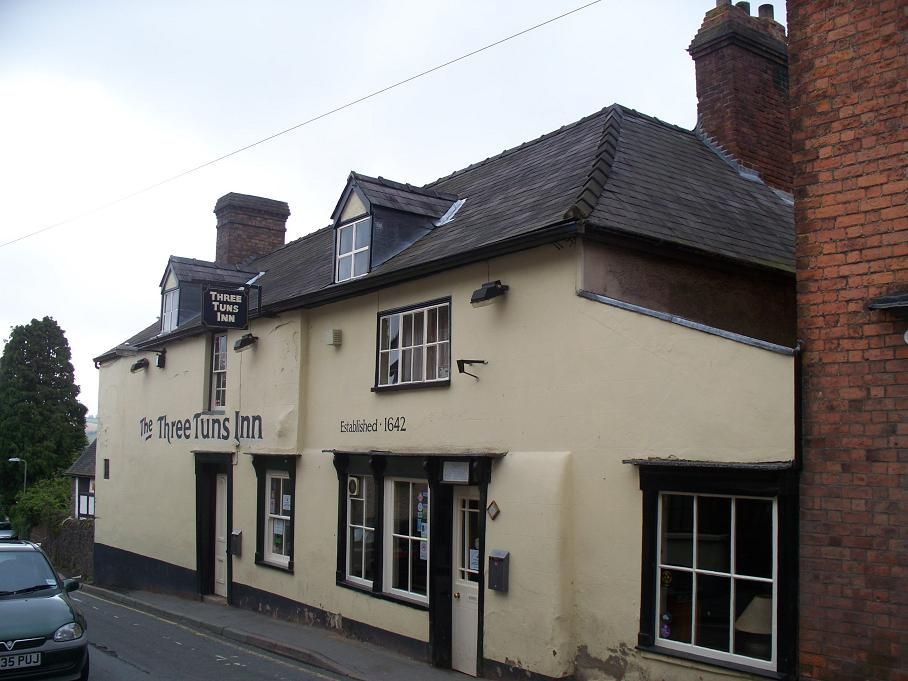
The town is famous for its connection to the brewing industry, having purportedly the oldest surviving working brewery in the country, the Three Tuns.


As you can see, it was established in 1642, the year the Civil War broke out. Well, all that soldiering is likely to work up a thirst. The brewery, behind the Inn and to the left, is part-Victorian, with a brick tower part that apparently makes it one of only four breweries in the UK to brew in this manner. 


Onwards, and next to Clun Castle.


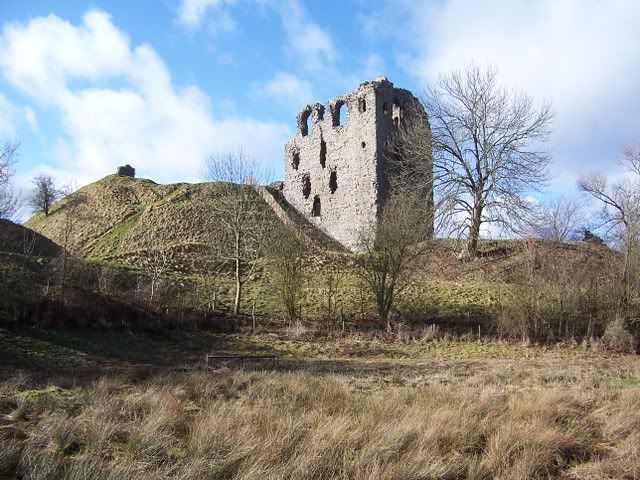
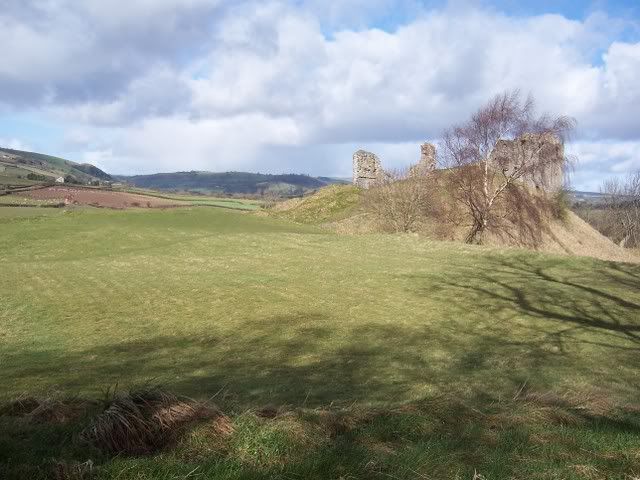
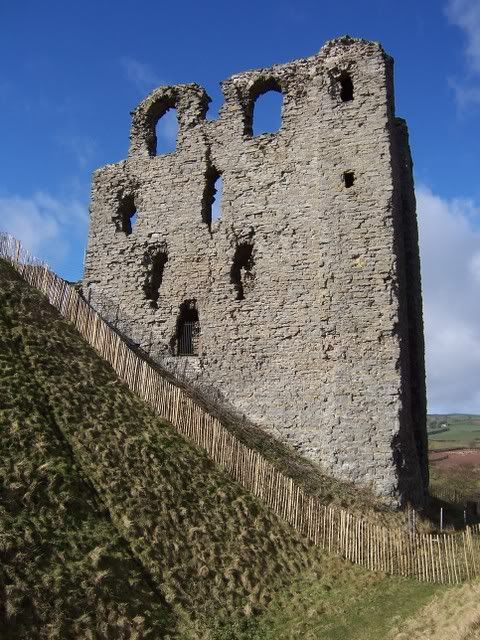
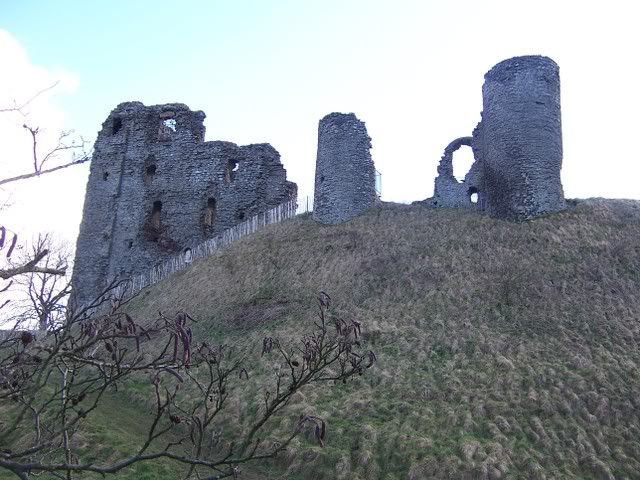
Clun Castle is a Norman motte-and-bailey castle with two baileys and formidable earthworks, built most likely by Picot de Say, who had received lands at Clun from Roger de Montgomerie, you know who he is by now of course. Following the Shrewsbury Rebellion of 1102 the lands were forfeited as mentioned above and Clun Castle remained connected with royalty for much of the 12th century. Briefly: Picot's daughter married Cadwgan ap Bleddyn, daughter of one of the Princes of Powys; their son Henry ap Cadwgan was possibly the same man as Henry de Say, who married one of Henry I's illegitimate daughters. Their son, Hellias de Say, was Baron of Clun during the Anarchy while King Stephen reigned. The barony was split, with Isabella de Say receiving the castle. In 1199 the castle was passed to her son William FitzAlan, of the mighty Shropshire family.


Back just over the border in Powys is Colwyn Castle, which was confused for Clun during the middle ages as the Welsh name for the English village of Clun is "Colunwy". Colwyn Castle, it should be mentioned, has no relationship to the town of Colwyn Bay up on the North Wales coast. Lord Rhys (remember him?), on one of his final campaigns, sacked and razed Colwyn Castle, an event that has forever become confused with Clun's history. In 1215 John FitzAlan rebelled against King John, causing the castle to again be attacked. William FitzAlan was with Richard I when he built Chateau-Gaillard in Normandy and possibly rebuilt the castle as a reflection of the royal castle there.

^ the River Clun, which gives the village its name, sweeps past the bailey.

Clun became the principal residence of the FitzAlans during the thirteenth and fourteenth centuries, successfully seeing off an attack from Llywelyn the Great in 1233, who nevertheless successfully captured Shrewsbury the following year. Anyway!


Clun came under the power of Roger Mortimer of nearby Wigmore Castle, which has also been mentioned in a previous blogEdward I stayed here in 1295, on his way back from a second tour of his Welsh works. The FitzAlans were very well connected with the monarchy and, in 1370, Edward III loaned 10,000 marks from the family. When the FitzAlans became Earls of Arundel as well, Clun Castle was used as more of a hunting lodge, keeping the Earl's stud. Quite the history, wouldn't you agree? Well, it wasn't to last. Owain Glyndwr helped to bring about the end of this prosperity of the castle during his years of rebellion against Henry IV. By 1539 it was described as "somewhat ruinous" and wasn't used during the Civil War. Tourism became it's sole draw, despite the FitzAlans owning it until 1677. In 1894 the Duke of Norfolk (in English Peerage, the Premier Duke), Henry FitzAlan-Howard bought the castle ruins and, while it is still part of their estates, it is now owned by English Heritage (and is a great free day out!)


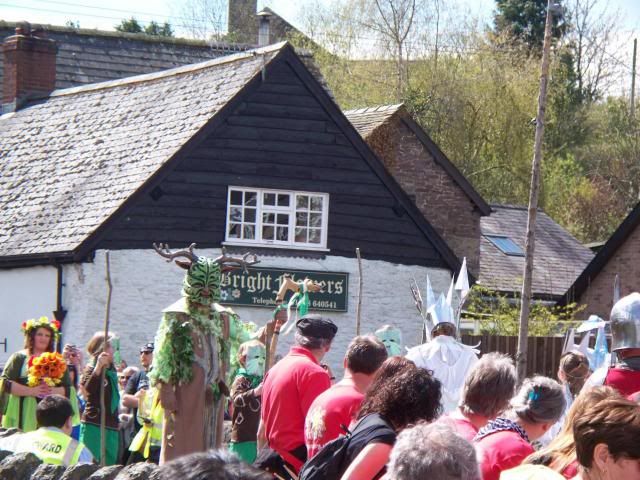
Today the village of Clun is also famous for its Green Man festival which has taken place over the May Bank Holiday every year since 1999. A symbolic festival demarcating the passage of the seasons, the Green Man enters the village and battles the Spirit of Winter on the packhorse bridge:


^ The Green Man and the Ice Queen face off at the 2013 Festival.

The Green Man is a pagan symbol of rebirth that, curiously, often finds his way into church architecture, possibly as a rebellious folkloric element, and possibly as a reflection that the early Christian missionary church adopting many pagan beliefs into its own doctrine in an effort to ease the conversion. Green Men abound in Arts & Crafts architecture, where there is almost a desire to regress back to a more primitive English style, and there has been a recent resurgence of use of the motif in modern art, where all kinds of stylistic identities are raped in the name of modernity. Neopaganism, too, makes use of the Green Man as a metaphor for personal enlightenment.


Not far from Clun is the town of Craven Arms, where we find our next castle, Stokesay Castle!


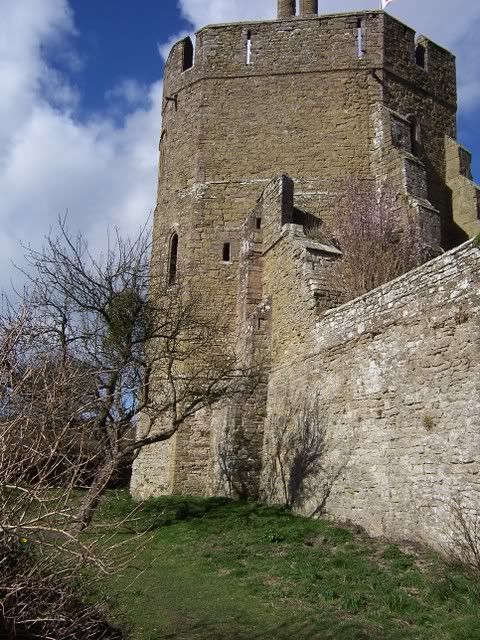
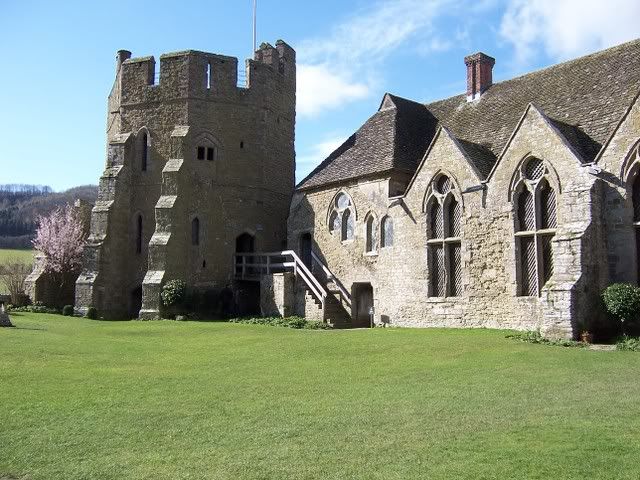
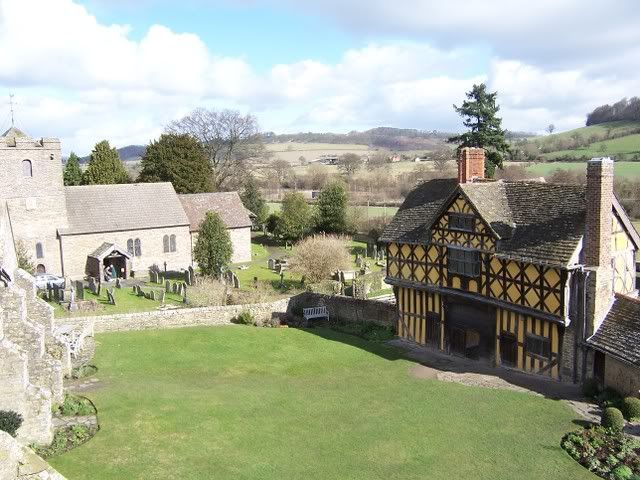
Stokesay is a fortified manor house and one of the most instantly-recognisable buildings in the county. Post-Conquest, Stokesay (or Stoches) was granted to Roger de Lacy, who also had manors at Stanton Lacy and Ludlow. The castle isn't mentioned in Doomsday but a mill and apiary are, with land for 14 ploughs (5 of which were held in demesne, or worked on behalf of the lord. Stokesay was regranted to Theodoric de Say in 1115 as the tenant of the de Lacys, at a place then called "South Stoke". Hence, Stoke and Say.


The manor was under contract to be lived in from Henry III, to counter raids from the Welsh. It is probably around this time that building of the "castle" began - it was certainly completed around the time Edward I instigated the license to crenellate in 1291 (not a license to crenellate as such, but more a license to build a fortification, the idea being it would only be granted to the king's allies, who wouldn't use their fortifications against him).

The house was sold in 1281 to Lawrence of Ludlow for "a juvenile sparrow hawk", obviously a decent price back in the day. Lawrence was a wool merchant, making most of his profit from the Low Countries, which according to the guidebook had an insatiable appetite for English wool. Lawrence was also a creditor to the King, as well as the Earls of Arundel and the Mortimers of Wigmore, kind of goes one step ahead of the FitzAlans, doesn't it?

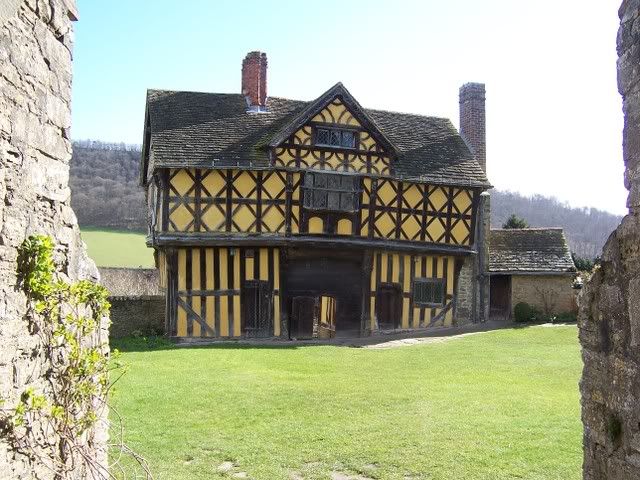
^ the gatehouse, one of the most famous buildings in English history. 

Lawrence became something of a neuveau riche, investing his money in local land. He obtained a Charter of Free Warren (hunting rights) from the king in 1281, and extended the manor's grazing rights in 1288. By the time of his son's death in 1316 the manor comprised 200 acres, over which were spread a dovecote, two mills and a wood.

The Ludlows continued their trade through the fourteenth and fifteenth centuries, and it wasn't until 1598 when the manor house had to be sold to clear the debts of Henry Vernon, who had married Anne Ludlow. It was sold to Sir George Mainwaring for £6000. It was sold again in 1620 to the Craven family for £13,500. The gatehouse was built in the 1640s by the Cravens' tennant Charles Baldwyn, MP for Ludlow. He was later fined by Parliament for "delinquency", ie supporting the King during the Civil War.


It was during the civil war that Stokesay saw its one and only military encounter - 1645 saw the castle sieged by parliament on their way to Ludlow Castle. All that happened following the castle's capitulation was the demolition of the curtain walls. Charles' son Samuel Baldwyn, also MP for Ludlow, flourished during the Restoration as a lawyer. On his death he was assessed as having 17 chimneys eligible for hearth tax (that is, one shilling for every chimney a taxpayer has - it was instigated by Charles II and repealed within about 20 years).

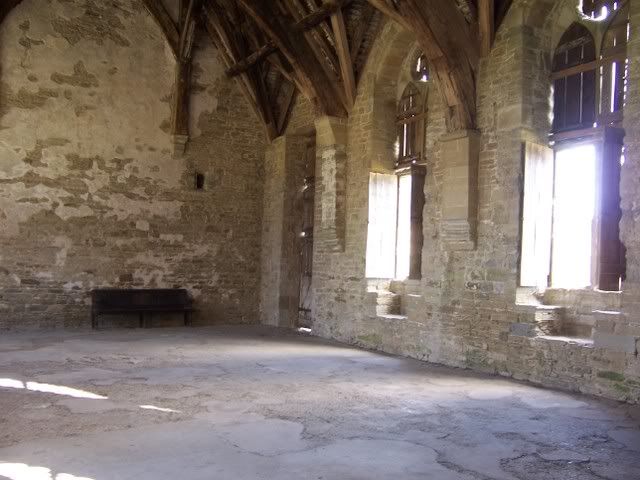
^ the hall. 

Following Samuel's son Charles dying in 1706, the castle stopped being occupied. The castle became part of the nearby farm and was used as such for a hundred and fifty years. The castle buildings were bought in 1869 in an effort to preserve them for the future, which has been going on since.


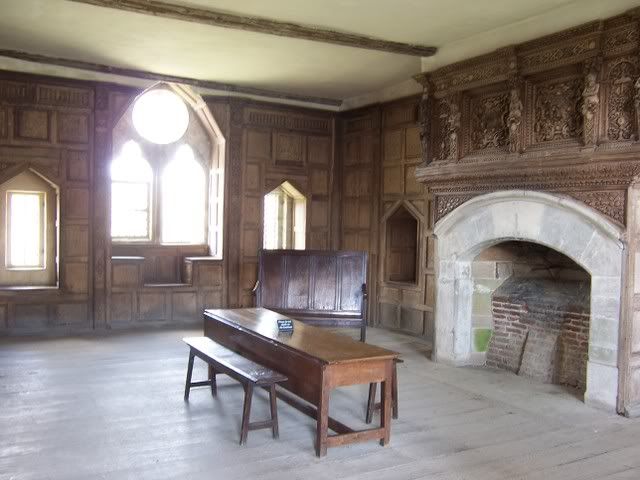
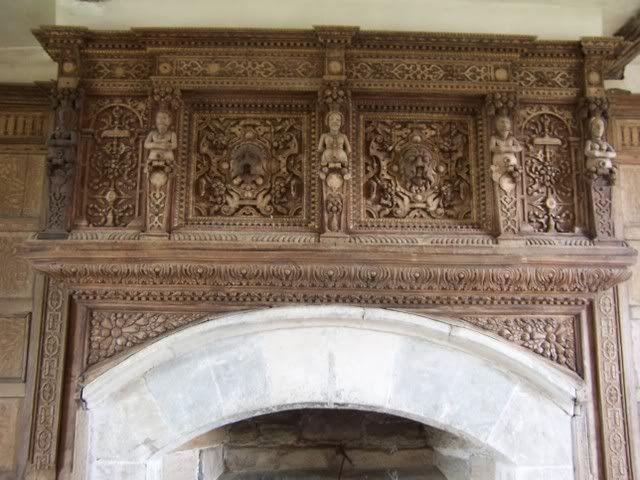
 ^ the solar, and its impressive overmantel.

Its an impressive survivor of the middle ages, and is very nice to wander around and stuff. The only problem is that it's quite popular, despite being fairly out-of-the-way off the main road from Ludlow to Shrewsbury. English Heritage seem to use it as the face of their Midlands things, though, so you're not really alone to wander about and all the rest of it. It is a fantastic little site though, and a very flavoursome example of medieval England!